




Historic environment records
Historic Environment Records (HER’s), previously known as Sites and Monuments Records, provide access to historic information about buildings, monuments, places and sites of archaeological finds. They are held and maintained by county councils, district councils, unitary authorities, national parks and landowners such as the National Trust.
HER’s are digital databases that cover the whole area of the authority, providing sources of, and signposts to, information, which may be mapped across the area using Geographic Information Systems (GIS). They can be used for planning, development control and for educational purposes. They are also used by statutory undertakers and developers and may be consulted by the public.
They typically record monuments, events, sources and archives. They may also include reference collections such as archaeological reports, building investigations and so on.
There are more than 80 HERs in England, a list of which is maintained by Heritage Gateway.
Some major historic towns and cities will have an Urban Archaeological Database (UAD), which may be held as part of the local Historic Environment Record.
The National Planning Policy Framework (NPPF), published by the Ministry of Housing, Communities and Local Government in December 2024, defines a historic environment record as: ‘Information services that seek to provide access to comprehensive and dynamic resources relating to the historic environment of a defined geographic area for public benefit and use.’
[edit] Related articles on Designing Buildings
- Archaeology and construction.
- Building Preservation Notice.
- Conservation area.
- Conservation officer.
- Designated areas.
- Enterprise and Regulatory Reform Act 2013 and listed buildings.
- Heritage partnership agreement.
- Historic England.
- Institute of Historic Building Conservation.
- Listed building.
- Planning authority duty to provide specialist conservation advice.
- Scheduled monuments.
- Sites of Special Scientific Interest.
- What data should be incorporated into Historic Environment Records.
IHBC NewsBlog
IHBC sponsors Gardens Trust event 23-4 Sept 2026
.jpeg)
'Learning from the Past, Shaping the Future’ takes place in Milton Keynes
Renovations to Frank Lloyd Wright's Fallingwater complete
.jpg)
World Heritage Preserved project opens house for tours again
Shakespeare Birthplace Trust places Hall's Croft on HAR Register
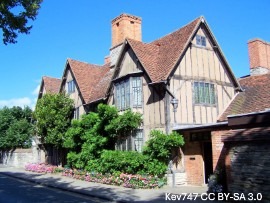
Stratford-upon-Avon home of Shakespeare's daughter is 'At Risk'
Lady Grange’s House repaired on St Kilda
.jpg)
National Trust for Scotland repairs stone cleit with link to famous island resident
Griff Rhys Jones on BBC Radio 4 Today programme
,_Green_Lane,_Derby.jpg)
The Victorian Society’s President unveiled its latest Top Ten Endangered Buildings 2026.
Need a MATE? Book your place now.
IHBC offers free webinars on applying for IHBC accreditation (Full & Associate).
UK Stained Glass Repository finds windows new homes
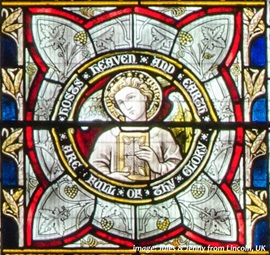
How are stained glass windows are rescued, stored and repurposed?
APPGEBE report sets high aims for quality
'Government must not sacrifice quality in drive to build 1.5m homes'
New measures protect Historic Shipwrecks from heritage crime

Underwater cultural heritage benefits from new HE guidance
How could the City of London skyline look in 6 years' time?

Visualisation shows approved planning applications as completed buildings
National Trust for Scotland calls for VAT cuts
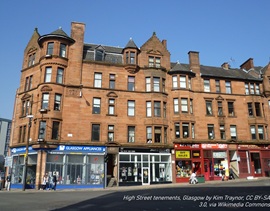
Heritage neglect is encouraged by current policies
IHBC's 'Context' Issue 186 features Industrial Heritage
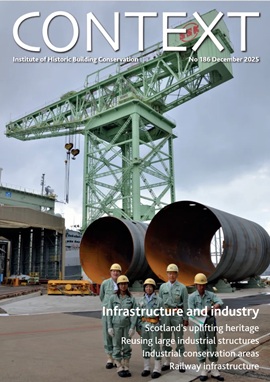
IHBC's members' journal reports on the challenges of conserving infrastructure
Book now for IHBC Annual School 2026
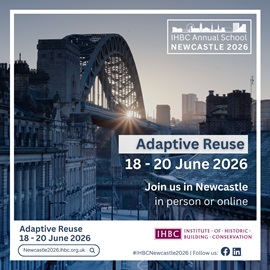
IHBC Annual School is taking place 18-20 June 2026 in Newcastle
RICHeS Research Infrastructure offers ‘Full Access Fund Call’
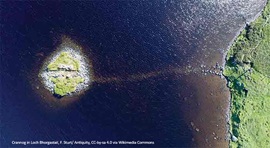
RICHeS offers a ‘Help’ webinar on 11 March
Latest IHBC Issue of Context features Roofing
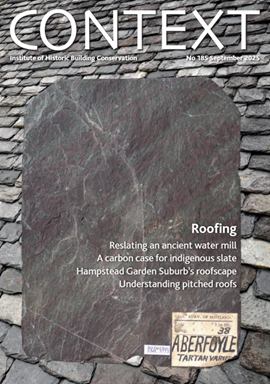
Articles range from slate to pitched roofs, and carbon impact to solar generation to roofscapes
Three reasons not to demolish Edinburgh’s Argyle House

Should 'Edinburgh's ugliest building' be saved?
IHBC’s 2025 Parliamentary Briefing...from Crafts in Crisis to Rubbish Retrofit
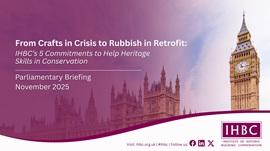
IHBC launches research-led ‘5 Commitments to Help Heritage Skills in Conservation’
How RDSAP 10.2 impacts EPC assessments in traditional buildings

Energy performance certificates (EPCs) tell us how energy efficient our buildings are, but the way these certificates are generated has changed.